
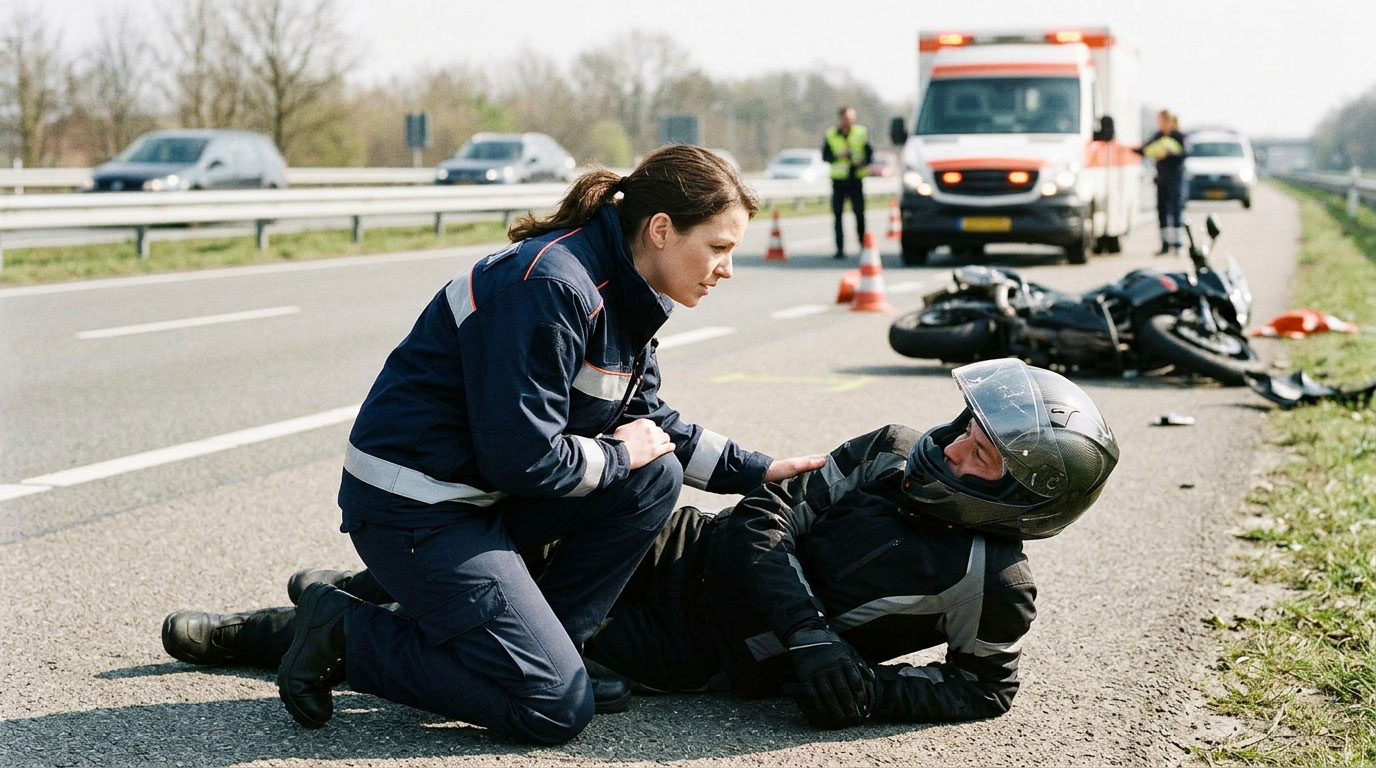
Knowing what to do after a motorcycle accident starts with one priority: people before paperwork. Call for emergency help when needed, avoid additional danger, and get appropriate medical care. Document the crash and notify your insurer only after urgent safety needs are addressed.
The issue remains timely. In its July 2026 motorcycle safety report, NHTSA estimated that 86,887 U.S. motorcyclists were injured in 2024, up 5.2% from 2023. This Motorcycle Accident Guide article explains practical next steps for riders and passengers, including preserving camera footage and organizing records.
Put Safety First and Call for Help
If someone is injured or there is immediate danger, call 911. Give the road name, direction of travel, nearby landmark, and the number of people involved. Explain whether anyone is unresponsive, bleeding heavily, or having trouble breathing. The National 911 Program recommends following the call-taker’s instructions and staying connected until told to hang up.
Do not walk into traffic to retrieve belongings or photograph damage. Move away from danger only if you can do so safely. If a head, neck, or back injury is possible, avoid unnecessary movement and tell the dispatcher. Never chase a driver who leaves the scene.
Leave Helmet Removal to Trained Responders
The American Red Cross advises against removing a helmet from someone with a suspected head, neck, or spinal injury unless CPR requires it. Avoid moving an injured person unless immediate danger or lifesaving care makes movement necessary. Follow emergency instructions rather than improvising.
Get Medical Attention and Monitor Symptoms
Accept an emergency assessment and seek prompt medical evaluation after a significant impact or when symptoms develop. Tell the clinician whether you struck your head, lost consciousness, or have pain, dizziness, numbness, or confusion. According to the CDC’s concussion guidance, some symptoms appear hours or days after an injury.
Know the Emergency Warning Signs
Call 911 or seek emergency care for a worsening headache, repeated vomiting, seizures, slurred speech, unusual confusion, weakness, or difficulty waking. Do not wait for an insurance decision. Ask your healthcare professional what activities to avoid and when to return for follow-up care.
Ask someone you trust to help with transport and practical arrangements. Do not ride home if you feel dizzy, confused, unsteady, or otherwise impaired.
Document the Scene Without Taking Risks
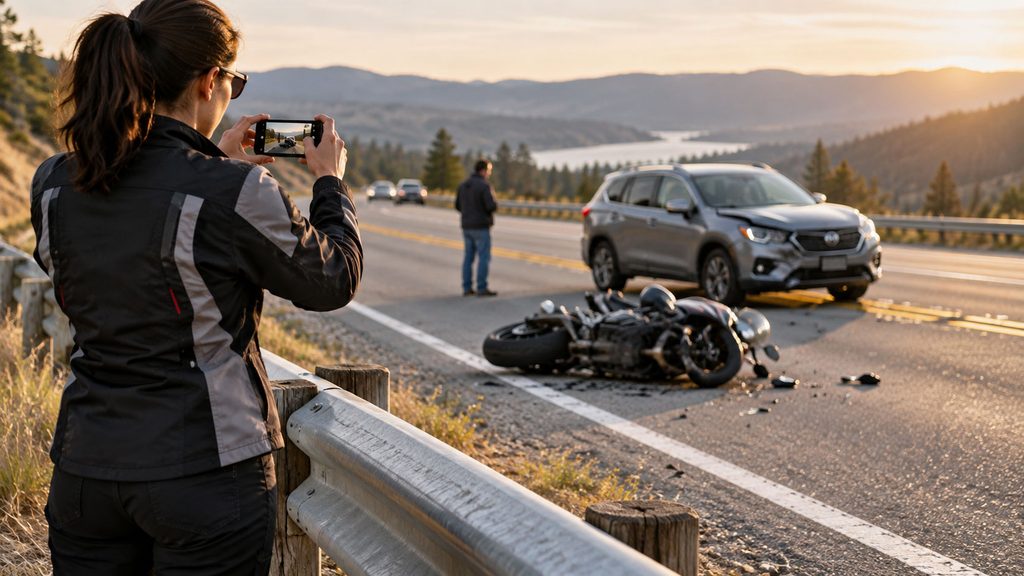
Once urgent care is arranged and the scene is safe, exchange names, contact details, vehicle information, and insurance details. Ask witnesses for their names and phone numbers without coaching their accounts. Note the responding officer’s agency, report number, and instructions for obtaining the report. The NAIC’s accident documentation guidance outlines these basic records.
Photograph vehicle positions when safe, motorcycle damage, license plates, road markings, traffic controls, debris, and relevant road conditions. Take wide views and close-ups. Do not delay treatment or required traffic clearance for photographs. If you cannot document the scene, ask a trusted person to help when permitted.
Record Facts Rather Than Conclusions
Write down the time, location, weather, and what you personally remember. Be truthful with police and insurers, but do not guess about speed, distances, injuries, or fault. Say when something is unknown rather than filling gaps with assumptions.
Preserve Helmet-Camera and Other Digital Evidence
After safety and medical needs are handled, save relevant camera footage before normal recording continues. Some devices overwrite unsaved clips. For example, Garmin’s recording instructions explain how a dash camera deletes unsaved video to make room. Your motorcycle camera may work differently, so follow its manual.
Keep Originals and Make Backup Copies
Keep the original files and preserve the recording device or memory card. Create a backup without trimming, filtering, or adding captions to the original. Note the device model and any known timestamp error. Preserve footage before and after the impact, not just the collision itself.
A Practical File-Organization Method
Create folders for original videos, photographs, reports, and correspondence. Keep an untouched copy separately from anything prepared for sharing. Record where each file came from. Ask nearby businesses whether relevant footage can be preserved; do not assume you can access their systems or that recordings will remain available.
For a camera belonging to someone else, write down its location and the relevant time window. Ask the owner to retain the original recording for police or an authorized request. Note that a camera’s displayed time may differ from the actual time. Avoid relying on a screen recording or a social-media copy as your only version.
Notify Your Insurer and Arrange an Inspection
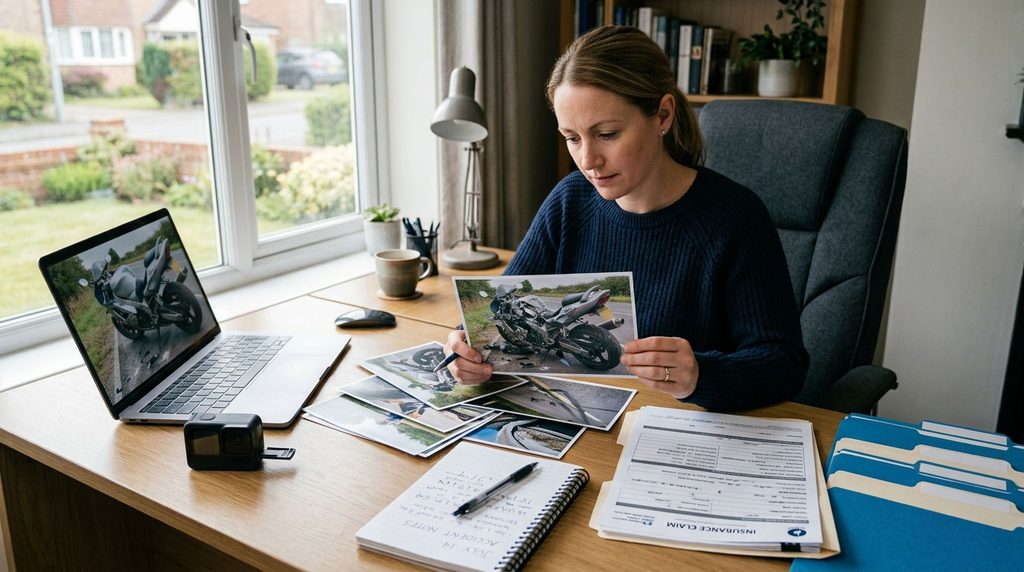
Report the crash promptly using your insurer’s official phone number, website, or app. Provide the facts available and ask how to submit additional records later. Request a claim number and keep notes of communications. Cooperate with your insurer’s investigation and ask which policy conditions apply.
Ask about towing, storage charges, inspection, repairs, deductibles, and any applicable medical coverage. Do not assume coverage exists simply because another rider has it. Progressive’s motorcycle claims process illustrates inspection and repair stages, but your policy and insurer control your own claim.
Do not rush into signing a release you do not understand. Ask what it resolves and whether further expenses are included. For disputed liability, serious injuries, or legal deadlines, consult an attorney licensed in the relevant state.
Organize Recovery Records and Preserve Damaged Gear
Keep medical instructions, bills, repair estimates, towing receipts, and records of missed work together. Record symptoms accurately and discuss changes with your clinician. Ask about follow-up appointments and a safe return to driving or riding rather than setting your own recovery deadline.
Photograph and retain damaged protective equipment while inspection or evidence questions remain unresolved. Retaining a helmet does not mean reusing it: the Snell Foundation recommends replacement after an impact during use. Arrange for the motorcycle’s condition to be assessed before riding it again.
Common Questions After a Motorcycle Crash
What If the Other Driver Leaves?
Do not pursue the vehicle. From a safe position, record any details you remember, such as its color, plate, travel direction, and distinguishing features. Report the incident to police and your insurer. Ask your insurer whether any coverage applies; do not assume payment is guaranteed.
How Long Do I Have to Report an Insurance Claim?
Do not rely on a generic 24-hour or 30-day rule. As the Washington insurance regulator explains, reporting periods can depend on the policy and insurer. Confirm your requirements promptly. Separately, ask the relevant authorities or a licensed attorney about any reporting or legal deadlines.
Keep Your Next Steps Manageable
Knowing what to do after a motorcycle accident does not mean completing every task immediately. Prioritize emergency care, then reliable documentation and clear communication. Explore our motorcycle accident articles and guides as you work through questions about safety, records, and insurance.
This article provides general U.S. educational information, not medical, legal, or individualized insurance advice. Follow emergency responders’ instructions and seek qualified guidance for your circumstances.